Last weekend, while the majority of UK
fandom were up at Northampton for the N.I.C.E. convention, I went and visited
two Brighton art exhibitions in the nick of time before they closed.

The first was the MA Sequential Design/Illustration show at Brighton University. There was a plethora of rising and existing talent that knocked my socks off including Dominic Evans (art below)...

...Ellie Crane and Sophy Henn. Then there was Phil (I didn't catch his last name)'s Parallel Universe Switch and accompanying graphic novel, which promised a better life at the push of a button. Apparently, I'm already living in the luckiest universe, which is handy.

Apart from the fact that the show centres around sequential art (in it’s multifarious forms – not just obvious comics), I was there to see the work of two friends, Rory Walker and Woodrow Phoenix. Rory is a former Brightonian and regular
attendee of Cartoon County. For this course he made a beautiful paper theatre
telling the story of Sinbad. The theatre was made exquisitely with some really
neat technical touches using magnets. He talks more about constrructing paper theatres here.


So that’s almost a meter square book (over 2.5 ft sq), that
not only has all the original artwork in it, but Woodrow also bound and made
the book himself. It’s impossible to get the sense of scale in a video or
photograph and it’s a book that has to be experienced "in the paper."

If comics like The Authority and The Ultimates are supposedly “wide-screen comics” then She Lives is an IMAX
experience, as the book fills your peripheral vision, giving the reader the
sense of entering the paper universe. This is the closest you’ll get to “immersive
comics” without all that digital nonsense.
Woodrow said he wanted to get back to that
feeling of being a child, when comics and picture books felt enormous in one’s
tiny hands. He’s succeeded magnificently. Currently a "work in progress" Woodrow hopes to finish it before the end of the year and whether this ever gets published at
this size (and anything smaller would be doing it a disservice) time will tell.
Meanwhile, look out for it, as it’s bound to be on tour shortly. It’s a great big beautiful beast of a book.
On the way home I popped into David Blandy’s solo show.


Simultaenously derivative and intriguing,
the show was hit and miss for me. Some elements, like the two films Anjin 1600
and Child of the Atom, work best. The first is a homage to the classic anime,
Ulysses 31, with the character Anjin (Japanese for "pilot") lost in space trying to either find his
way home or to the mythical planet of Edo. The story is also based on the
incredibly true tale of William Adams who became the only Western samurai (as fictionalised in James Clavell’s Shogun novel).
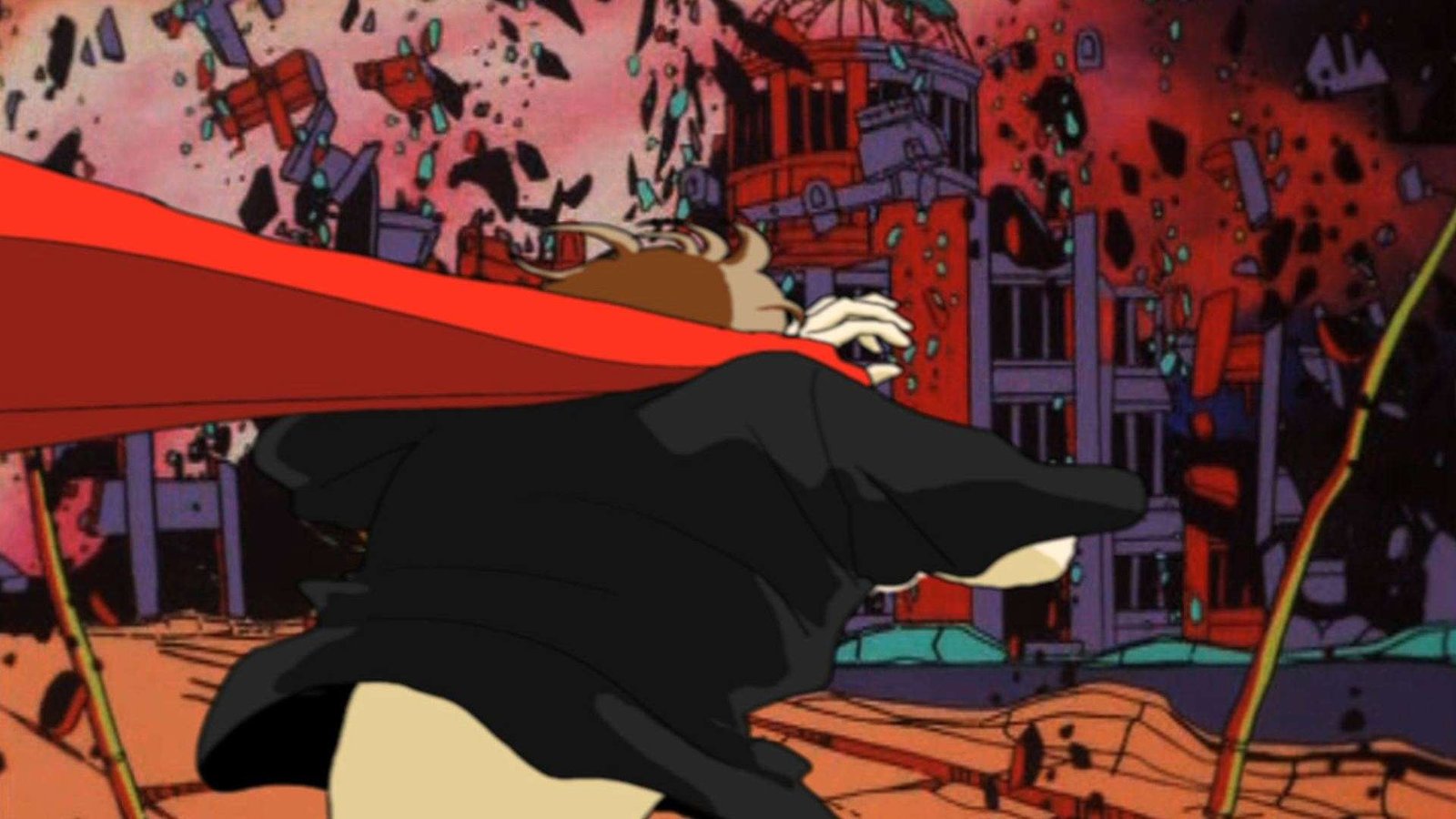
Child of the Atom was a powerful meditation on Hiroshima, as a docuemtary with Blandy wandering the city with his toddler daughter, as she narrates it as an adult from the future. This was all interesperesd with Akira-inspired animation.
Child of the Atom was a powerful meditation on Hiroshima, as a docuemtary with Blandy wandering the city with his toddler daughter, as she narrates it as an adult from the future. This was all interesperesd with Akira-inspired animation.
No comments:
Post a Comment